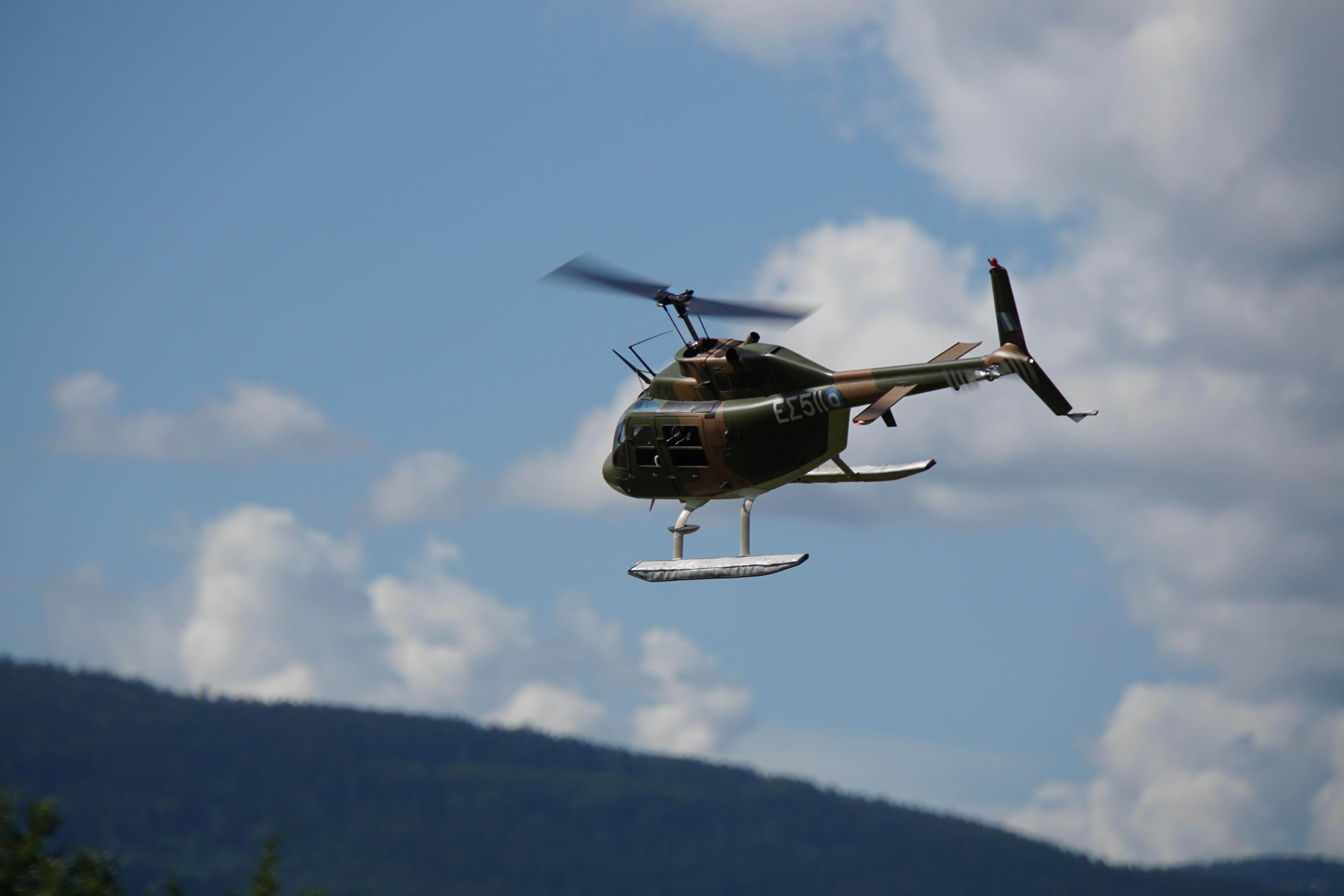
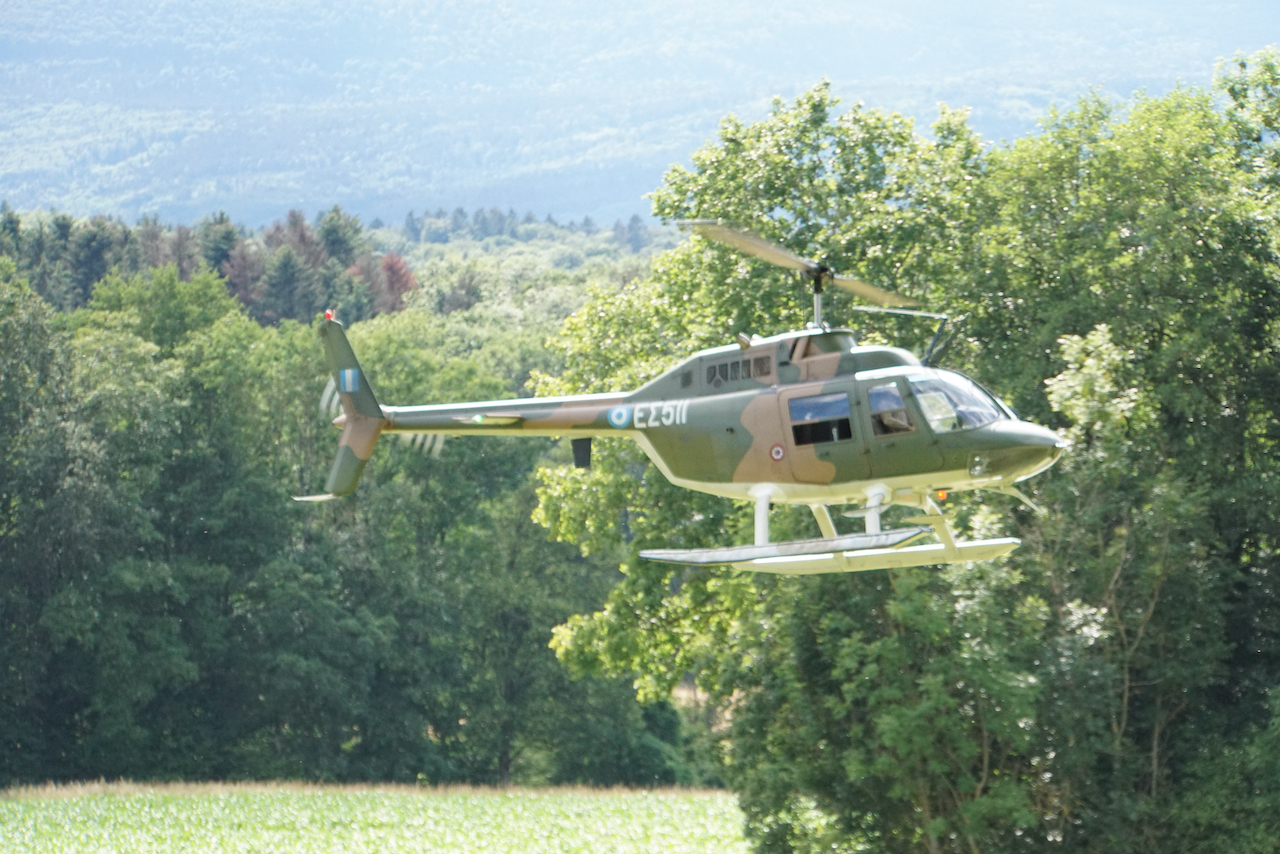
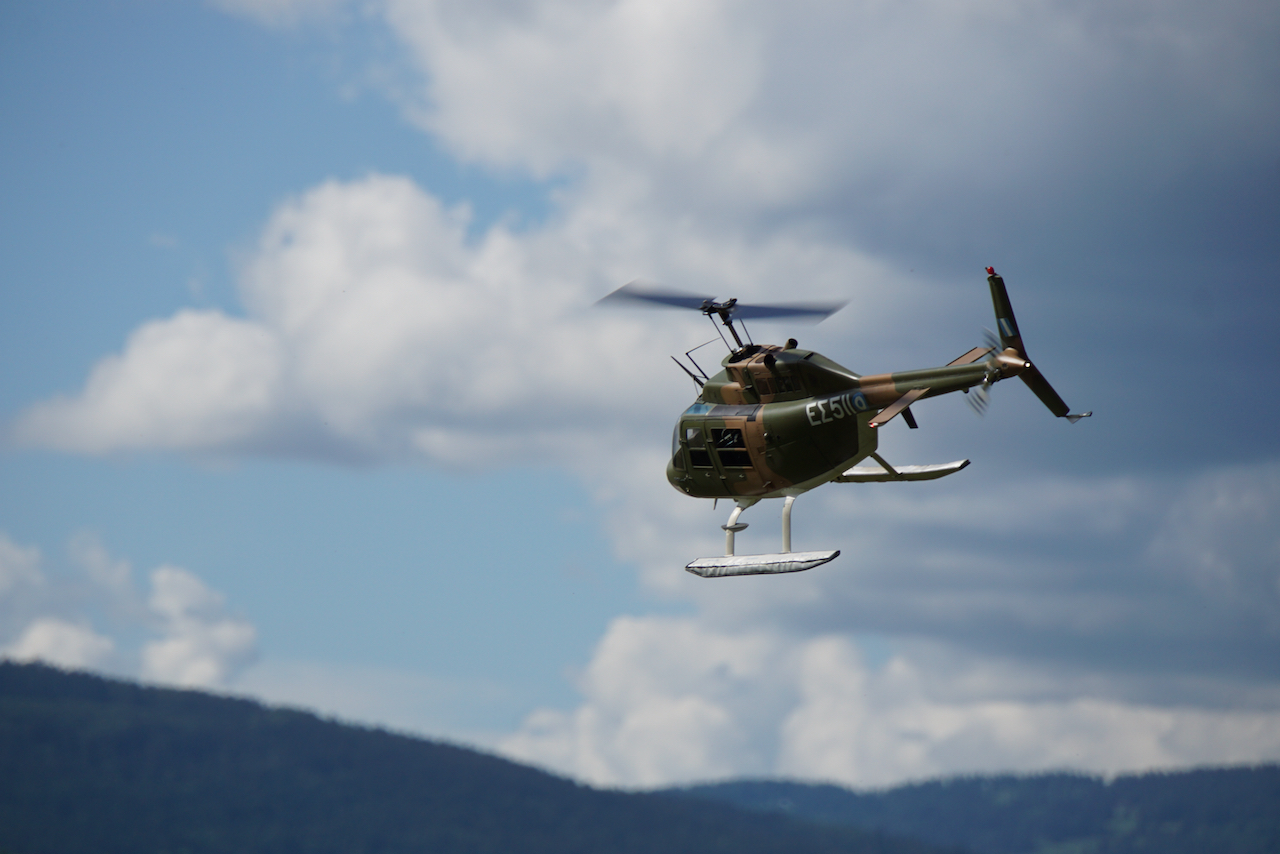
Agusta-Bell 206B RC Helicopter in Scale 1:5.7 of the Greek Army Aviation


Introduction

I have started this blog as an english-text alternative to a thread that I have opened in modelclub.gr (modelclub forum in greek) regarding my project to build an RC scale model of an Agusta-Bell 206B Jet Ranger II of the Hellenic Army (see unofficial site).


Now a few words about the project itself. The model is based on the fuselage provided by Vario (model 1004) in scale 1:5.7. There are very little differences between a Jet Ranger III (model kit) and an Agusta-Bell AB-206B Jet Ranger II that I needed for the project, so I decided to get the kit from Vario. The kit has been bought from one of the best specialists and professionals in the field, Mr Thomas Baumann who has helped me with making my choice of the model and its accessories (Helikopter Baumann). Thanks Thomas! I would also like to thank the team of eflight for their professional support not only for this construction but for all my RC models and accessories. In addition, I would like to thank the team from Innoflyer and especially Mr. Christophe Raible for the help with the lighting system and for letting me test a new CPL model before its official launch. I would like to add here the biwix.com RC helicopter store and Johnny Trolliet at my hometown Renens for his exceptional service, availability and prices!

The particularity of this project is that the mechanism that I fit in the fuselage is not the one from Vario but a modified Align T-Rex 700E (Align RC Helicopters). I will give here details on the way that this is done with diagrams, photos, tips and tricks. This will cover the first part. The flight tests of the modified T-REX 700E have been conducted at the RC model field in Dizy, Switzerland that belongs to the Dizy RC Modelling Group (GAM Dizy). Big THANKS to all the members of the Club for the great friendliness since the first day I started there and for their help with advice and tips!

The second part will be dedicated to the scale model itself. Some photos of the Greek AB-206B can be found on the internet but they do not cover all the details. More photos of the aircraft with the Greek colors may be requested in the forum of modelclub.gr where I have gotten most of them thanks to the team spirit and great friendliness of the members (THANKS^1000 dsamba!!!). In order to complete the photographic part of the project I managed to get my own photos of a Jet Ranger III. This has been made possible thanks to the courtesy of the people from Heli-Lausanne (Heli-Lausanne) who have immediately accepted my request to get there and take as many photos as I needed. A big THANKS to them too!!!
At the last phase of construction, I have got invaluable help for the dimensions of the AB-206B landing gear from Iraklis Karailidis. Many-many thanks to you Iraklis!

So after this short introduction I will start publishing the steps I have already taken and will take during this quite challenging project (at least for me, it is my first scale RC helicopter).

I hope that you will find this blog helpful if you have a similar (or the same) project as mine and you will enjoy it as much as I do!

Welcome!
Hellenicopter

12/11/2025

Flight in the fog...

A flight with the Jet Ranger in the foggy backdrop of western Switzerland in November...


Some fine-tuning still needed in the VStabi Vbar for the main rotor gain. The main rotor configuration is done with the CCW asymmetrical Spin-Blades (840mm, slightly longer than scale) and the original Trex 700 ratio (115:12) with the Hacker Turnado A50 400KV and a 10S battery pack. The motor even in the summer gets slightly warm and the heli weighs at least 9.5kg. The rotor headspeed is kept at 1250rpm by the old good Kontronik Jive 80+HV. Take off is at  around 5-5.5 degrees of pitch.

Happy modeling winter !
Cheers,
Hellenicopter


09/07/2025

Return...


The return of the AB-206 after many years.

The T-Rex mechanics, after a long period of pause and then some experimentation with tests, has been put back to the fuselage.

Installed new and slightly longer S-profile blades (from SpinBlades and Helicopter Baumann), solved the vibration problems with new small aluminum mounting plates and lowered the RPM to ±1250-1300 in latest (very quiet) test flights.

Also added some 3D-printed (HIPS) plastic top holders for the mounting of the mechanics to further stabilize the upper part of the fuselage (see pictures below - I had also tried the 440KV motor from Align, but I put back the Hacker A50 Turnado at 400KV for lower RPM).


Now, I am waiting the painting of the blades (balck) to dry and aslo doing some checkup of the motor from Hacker before resuming flights...


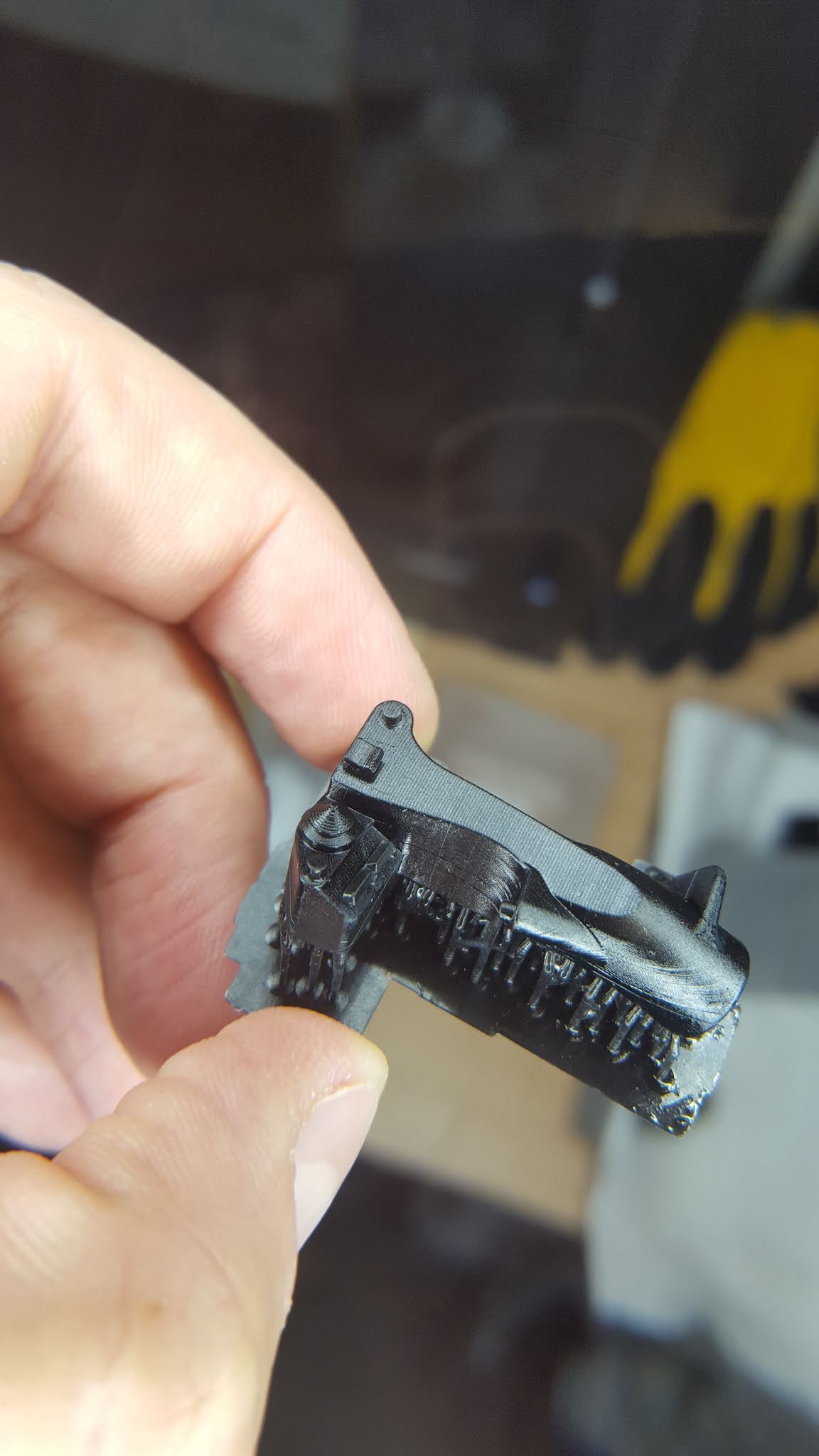
...and one more from the scale modeling part:  a 100% in-house fabrication (from CAD to 3D-printing, hybrid resin and FFD) of the collective lever its gear:


13/11/2020

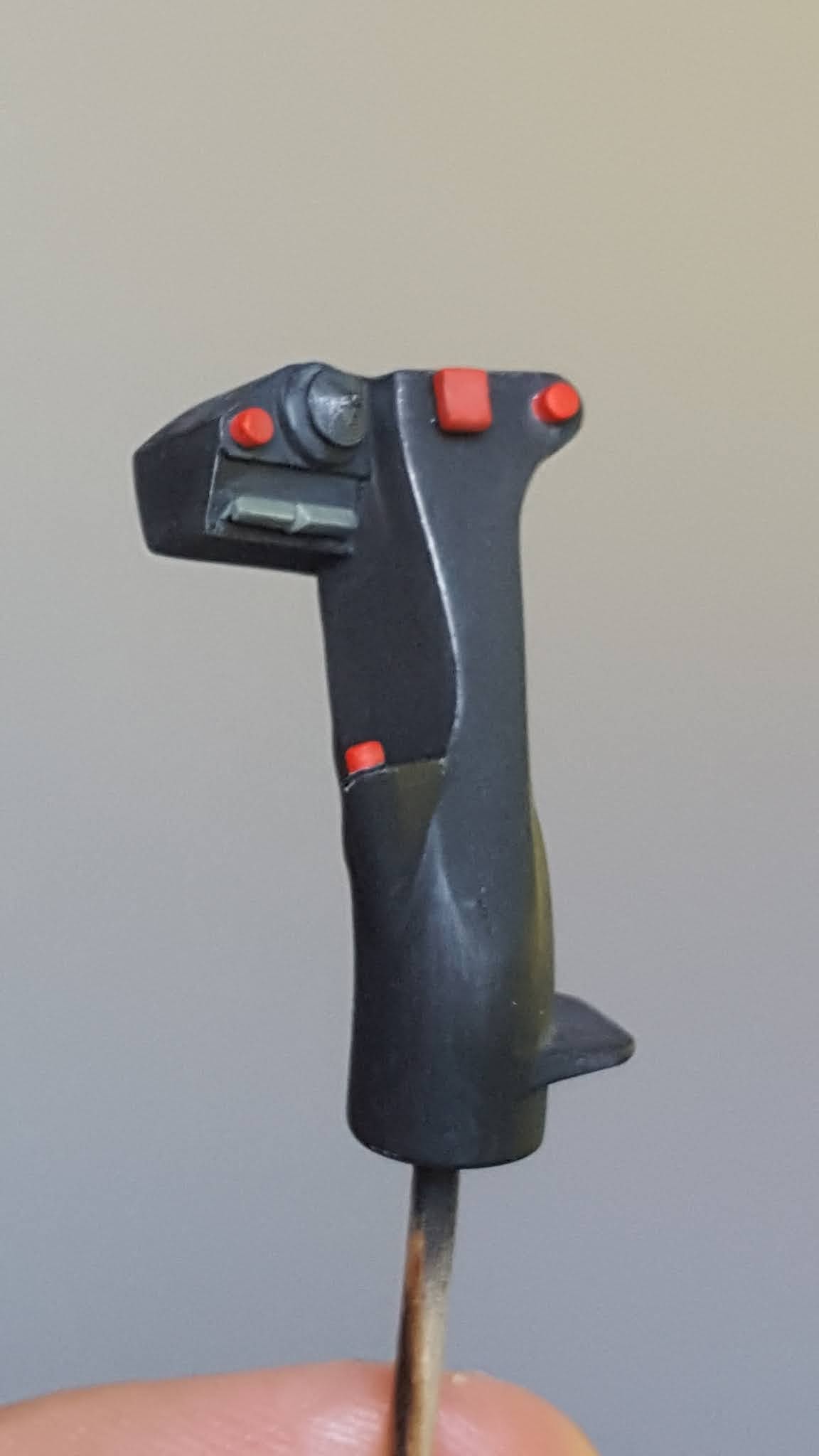
3D-Printed Stick Handle for the AB-206B 


Hi,

After a very long time of almost zero modeling activity a resumed the build of the interior parts of my scale helicopter.
In the meantime a Creality LD-002R 3D resin printer has been added to my "arsenal" and it gives very decent results (at least at this scale, ~1:6). I have used the Druckwege type D standard resin with 20 μm vertical resolution. Exposure time is of the order of 3.5s per layer and I have used 5 base layers with 50-60s exposure time for a good adhesion of the raft on the build plate.

The handle has been designed from scratch with Autodesk Fusion 360 CAD program.
 
I have tried to print and paint the stick handles of the helicopter with quite satisfying results (see pictures below). After removal of the many support pins of the model quite some time has been spent with various sandpaper grit sizes starting with 400 (always wet) and ending to 1000. Next a primer coat (black gloss primer from Alclad) has been sprayed with my Airbrush (H&S Evolution with 0.2mm nozzle). I did not spend time to correct small imperfections on the surface (tiny holes for example) as this is just a prototype, I needed only to find the general "recipe" for sanding and painting. Filling can be done easily using the the same 3D resin applied with a brush and cured with UV, so that was not an issue (tested successfully in the past). 
Once the primer set I continued with a fine brush to paint the buttons (red 71.003 and green 71.329) with Vallejo Model Air colors and when the colors dried I applied 2 coats of Matt Vallejo varnish. 
 
 
The model shape is not yet optimized as it is not so easy to find good pictures of the real one. It is easiest to find some by looking for "OH-58A cockpit" or something with the "OH-58A" in it.
 
I hope to find some time to continue and finish the cockpit.
 
Cheers,
Hellenicopter

16/07/2020